In a nutshell
An AI product I’m building with long-time friend and collaborator Stavros Kounis. I build end-to-end design and frontend for. Briefmark helps people make sense of the content they save but rarely revisit. Instead of acting as yet another bookmarking tool, it turns saved articles into structured knowledge you can actually use.
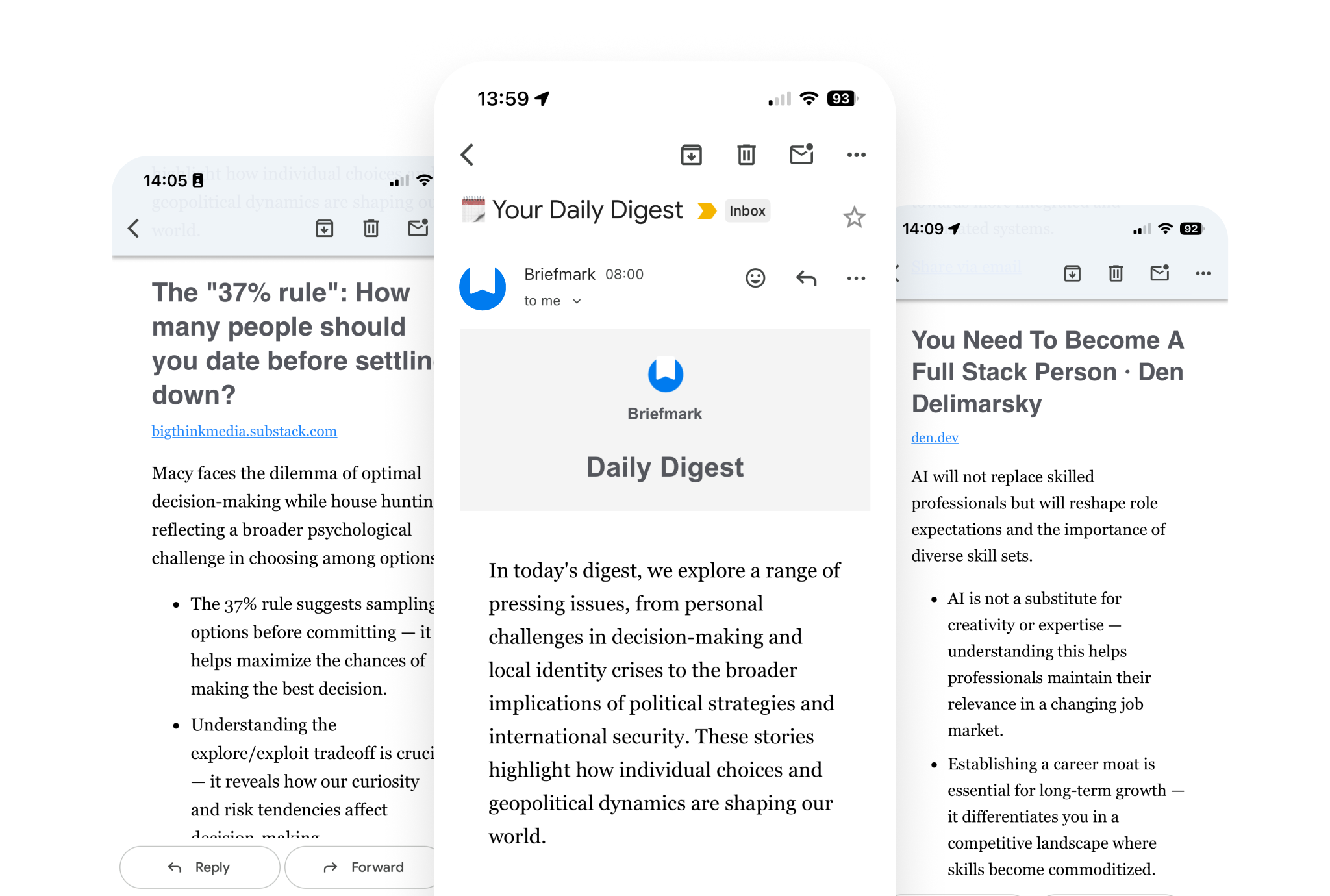
When you save an article, Briefmark processes it using AI to extract:
- a concise summary,
- key takeaways,
- and higher-level context that connects the ideas to a broader picture.
Rather than demanding your attention immediately, Briefmark meets you where you are. At a cadence you choose, it delivers daily email digests that surface what you’ve saved in a format designed for recall, not consumption overload.
Over time, Briefmark becomes more than a reading queue:
- a searchable memory of what you found interesting,
- a way to revisit ideas when they’re relevant,
- and a tool to synthesize knowledge across everything you’ve saved.
The experience is intentionally calm and minimal. Briefmark isn’t about reading more, it’s about remembering better and using ideas when they matter.
You can visit the live product at briefmark.ai.
Need
Briefmark was born out of a personal need I share with my long-time friend and collaborator Stavros Kounis. We’re both heavy readers, lifelong geeks, and now fathers of young kids. Our curiosity didn’t shrink, but our available time definitely did.
We wanted a tool that respected attention instead of competing for it. Something fast, smart, and frictionless that helps ideas stick, without requiring you to read everything immediately. When we couldn’t find it, we built it.
My role
I do product design and frontend development for Briefmark.
That includes:
- Defining the product vision and interaction model
- Designing end-to-end user flows and core UX patterns
- Hands-on implementation in React (Vite)
- Shaping how AI is experienced in the product, not just integrated
- Iterating directly based on real user behavior
Stavros drives backend architecture and infrastructure. We work as a tight two-person product team, shipping continuously.
Key product decisions
Every feature in Briefmark is designed to reduce friction in the learning loop: capture → synthesis → recall.
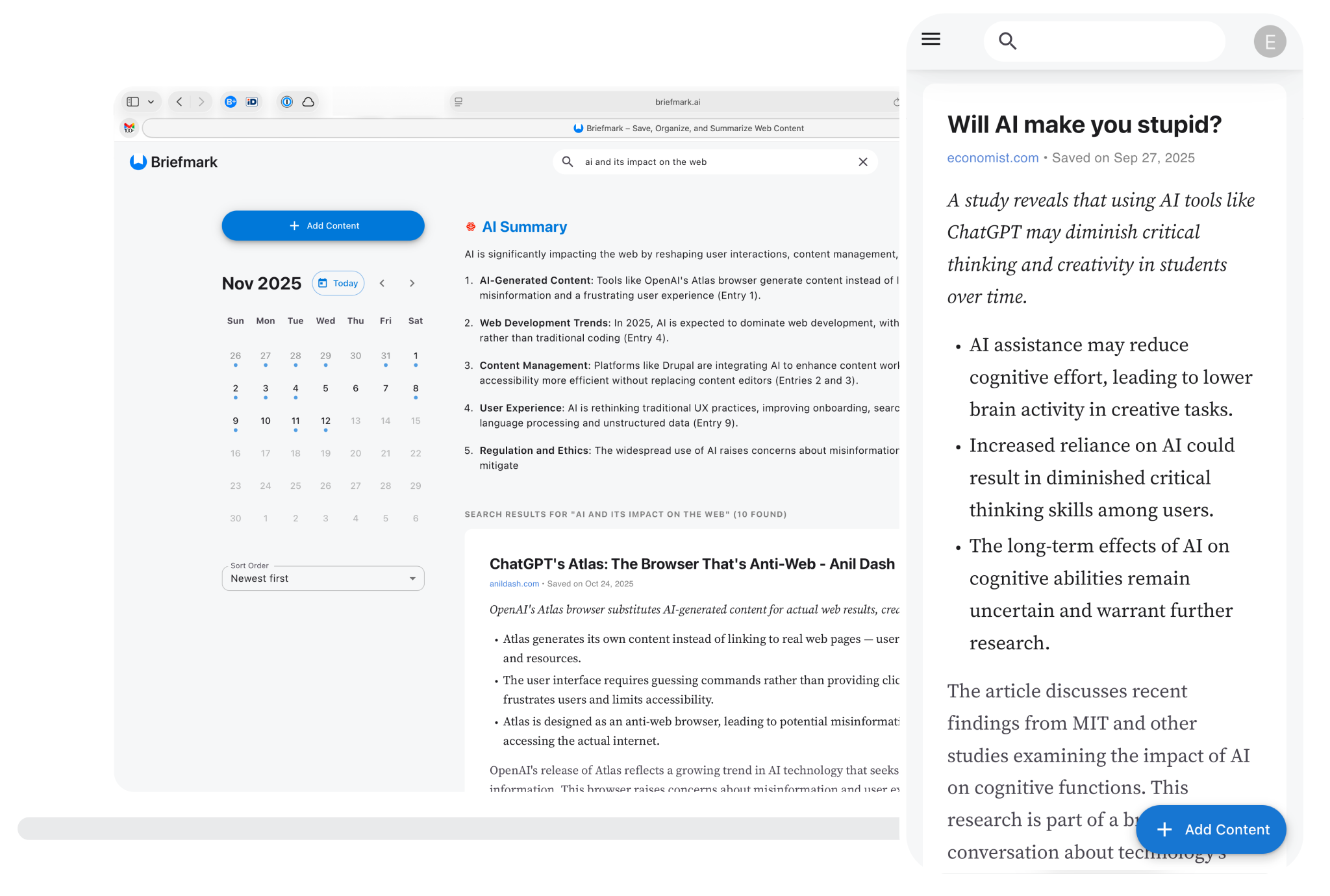
- Quick saving via browser extension and mobile (a couple of clicks or taps, designed to stay lightweight)
- AI-generated takeaways and context, designed to compress signal rather than replace reading
- Daily email digests that are intentionally short and predictable
- Clean, minimalist app to browse saves, revisit ideas, and stay organised
- Cross-platform by design: web and browser extension today, mobile apps in progress
Tech
briefmark.ai is built with the following:
- Frontend: React + Vite (mostly vibe coded using Claude Code)
- Backend: Firebase (authentication, storage, scheduled jobs)
- AI layer: AI API for summarisation, context extraction, and personalised digests
- Platforms: Web app and Chrome/Chromium extension, with Android version in testing, and iOS in development
How we build
We operate with a tight, user-driven feedback loop:
- Test features on ourselves and a small cohort of active users first
- Observe real reading habits rather than relying on assumptions
- Refine every step to maximise value
This keeps the product grounded, focused, and honest.
Reflections
briefmark.ai reflects how I like to work:
- Start from a real problem I personally care about
- As much as I’ve grown on my day job which at times involves “designing through others”, I still and always love staying hands-on from concept to shipped experience
- Iterate quickly, but with a strong bar for clarity, craft, and usefulness where every version should have something meaningful to offer.
Visit briefmark.ai to try it out. Got any feedback or ideas for making it better? Ping me via the contact page :-) 🙏🏼